
By Salum Ameir
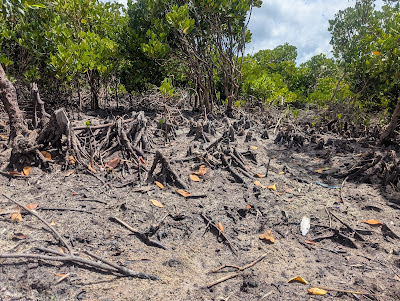
Residing on the shores of South Unguja, Uzi is a small island village in Zanzibar with a population of about 3,075 people. A community deeply intertwined with the land and sea, Uzi’s residents have long depended on mangroves for coastal protection, fishing, and sustenance. But over the years, the rapid deforestation of these vital ecosystems has placed Uzi and other coastal communities in growing danger. Coastal erosion, declining agricultural productivity, and heightened vulnerability to climate change are no longer distant threats they have become part of daily life.
Zanzibar has lost about 30% of its mangrove forests in the last two decades, leaving communities like Uzi exposed to the harsh realities of environmental change, according to the United Nations Environment Programme (UNEP). The consequences have been severe: saltwater is seeping into freshwater sources, soil quality is deteriorating, and extreme weather events are disrupting lives and livelihoods. For farmers, who form the backbone of the local economy, these changes are devastating.
Othman Mwinyi Haji, the community leader (Sheha) of Uzi, has seen the damage firsthand. “The loss of mangroves has led to saltwater intrusion into our farmland, making agriculture more difficult,” he says. “However, we are hopeful that projects like ZanzAdapt will help reverse some of these effects and restore our environment.” His words capture both the fear of an uncertain future and the cautious optimism that change is still possible.
In Uzi and nearby Ngambwa, where farming is the primary way of life, the consequences of mangrove destruction are unavoidable. Soil salinization and flooding are pushing families into hardship. Malik Mbaraka Makame, a farmer from Ngambwa, doesn’t sugarcoat the situation. “Restoring our environment requires all of us to work together,” he stresses. “We need everyone, from the government to community members, to take action if we want to heal the land and secure a sustainable future.” His words carry the weight of someone who knows that action cannot wait.
This crisis doesn’t recognize village boundaries. What happens in Uzi affects Ngambwa, and vice versa. The destruction of mangroves has left both communities vulnerable, but it’s also a reminder that recovery must be a shared effort.
Awadh Mwiga Ngau, a long-time resident of Uzi, looks back with regret. “Mangroves were cut down without considering the long-term damage. Now we are paying the price,” he says, his voice heavy with the burden of hindsight. “We must work together to heal the land before it’s too late.” For Awadh and others, the cost of past mistakes is now painfully clear—but so is the need to act before more is lost.
Local farmers, especially women, bear the brunt of these environmental challenges. Rahma Nassor Omar, who has spent years working the land, is struggling. “We are struggling with soil degradation, which is reducing our crop yields. Restoring the mangroves is critical to securing our future,” she explains. For her, this isn’t just about trees—it’s about survival, about ensuring that her children and future generations have a livelihood to depend on.
Beyond the immediate hardships, the crisis has a deeper impact, particularly on women. Zuwena Juma, Head of the Environmental Education Unit Zanzibar, highlights the gendered consequences of climate change. “Climate change directly impacts the environment, and flooding is one of the major issues. It forces farmers to move to other areas, and women, who have fewer alternatives, are especially vulnerable. Preserving the environment is crucial to prevent catastrophic disasters caused by human actions.”
Her words cut to the heart of the issue. In places like Uzi, where women play a central role in agriculture, they often have the least access to resources that could help them adapt. Their struggles are not just about climate they are about fairness, opportunity, and survival.
Amidst these challenges, there is hope. Mahfoudh Shaaban Haji, Director of the Zanzibar Climate Change Alliance (ZACCA), believes in the power of knowledge. “We are committed to raising awareness about the consequences of mangrove deforestation and providing solutions to mitigate climate change,” he says. For Mahfoudh, education is not just about information it’s about empowerment. If people understand what’s at stake, they are more likely to act.
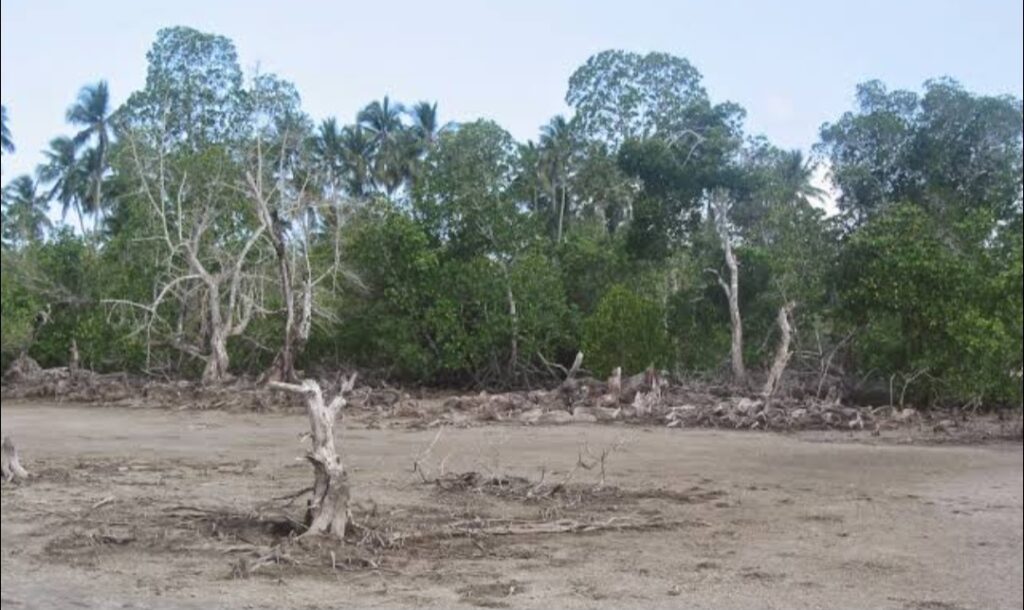
Community Forest Pemba (CFP), through the ZanzAdapt project, is already taking steps toward recovery. Mbarouk Mussa Omar, Executive Director of CFP, explains, “Our initiative prioritizes sustainable agriculture and mangrove restoration, ensuring that local communities can build resilience against climate-related threats.” His words reflect a vision for the future one where the land is restored, and the people of Uzi and Ngambwa can once again thrive.
Funded by Global Affairs Canada, the ZanzAdapt project is more than just an environmental effort. It’s a lifeline. By focusing on mangrove restoration, improving agricultural practices, and strengthening vulnerable communities, the initiative is helping people adapt to an increasingly unpredictable climate. Crucially, it also prioritizes the empowerment of marginalized groups, particularly women, ensuring they have a voice in shaping their future.
The fate of Uzi and Ngambwa’s coastal communities depends on one thing: collective action. The government, farmers, environmental organizations, and women’s groups all have a role to play in protecting the mangroves that have long shielded the island’s shores.
As the residents of Uzi, Ngambwa, and other villages across Zanzibar know all too well, the battle to restore their environment is far from over. It’s a race against time one that requires collaboration, education, and above all, action. The hope is that future generations will inherit not just the mistakes of the past, but also the resilience, determination, and wisdom to create a better, more sustainable world.