By Salum Ameir
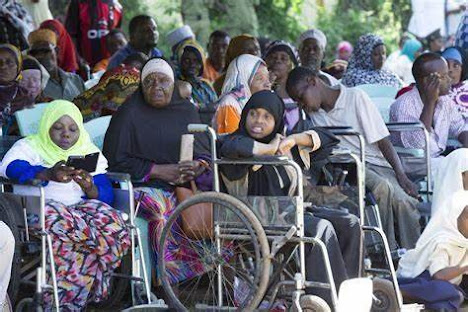
ZANZIBAR – Multiple stakeholders have raised concerns over the underrepresentation of people with disabilities in the House of Representatives, urging political parties and government bodies to create a more inclusive political environment. Their call comes amid growing frustrations that current systems fail to allow disabled citizens to choose or contest their own representatives.
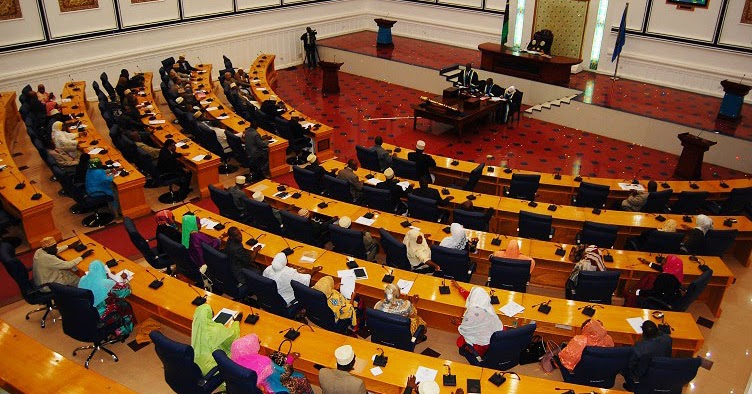
According to the 2022 Population and Housing Census, Zanzibar is home to 1,889,773 people, of which 215,434 (11.4 percent) are people with disabilities. Yet, out of 76 members of the House of Representatives, only three seats are currently held by people with disabilities: two special seats (Mwantatu Mbaraka Khamis and Aza Januar Joseph from CCM wings) and one presidential appointee, Anna Athanas Paul. Perhaps more fruitful change may be witnessed after the upcoming election in October, when the political landscape could shift to allow greater representation for people with disabilities.
Salma Saadat, Chairperson of JUWAUZA (Jumuiya ya Wanawake Wenye Ulemavu Zanzibar), stressed the need for cooperation between parties and communities. She explained that while communities may be ready to elect individuals with disabilities, political parties often fail to support such candidates, creating a barrier to leadership opportunities.
Meanwhile, Ussi Khamis Debe, Executive Secretary of the National Council for People with Disabilities, acknowledged that progress has been made but emphasized that much remains to be done. He urged political parties to create an inclusive environment where candidates with disabilities can thrive and contest seats beyond the special allocations.
However, despite Zanzibar’s long history of associations advocating for disabled rights, Adil Mohamed Ali, Coordinator of the Zanzibar Association of the Blind (ZANAB), noted that these groups have yet to form a unified voice strong enough to influence policies and laws. He called for greater collaboration to present a single, powerful proposal that could push systematic reforms.
In addition, advocate Bakar Hamad mentioned the role of media and technology in bridging gaps, suggesting that radio, television, and social media should be used to amplify the voices of disabled candidates and provide them with platforms to connect with voters without facing public discrimination.
Similarly, Sada Hamad Ali from the Zanzibar Federation for People with Disabilities added that true inclusivity must also address gender equity. She emphasized that both men and women with disabilities have equal rights to access leadership opportunities and be represented, presenting their demands clearly within the political sphere.
After all the statistics and advocacy, the voices of individuals remain the strongest reminder of what is at stake. Nawaz Ahmed (not her real name), an advocate with albinism, shared her frustration.“We want to choose our own representatives so that we can hold them accountable. We cannot hold someone accountable whom we have not chosen; they will serve to satisfy the one who chose them, not us.”